


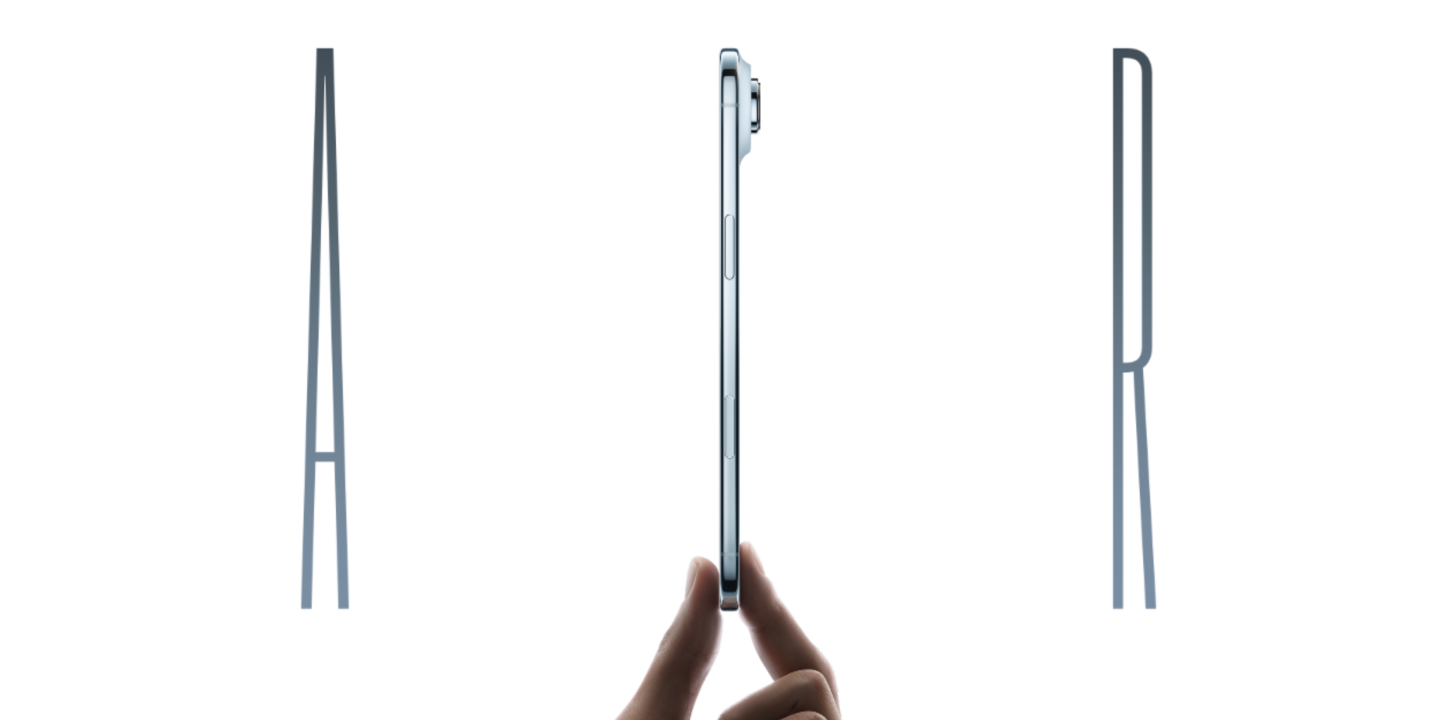
Apple’s new iPhone Air (the iPhone 17 Air) debuted in September 2025 as the thinnest iPhone ever madeapple.com. At just 5.6 mm thick and weighing only ~165 g, it uses a grade-5 titanium frame (over 80% of which is recycled) to stay light yet strongapple.comapple.com. The Air introduces a precision-milled “plateau” on the back that houses its camera and internals, freeing up room for battery capacityapple.com. Despite its slim build, it meets Apple’s bend and durability tests by using “Ceramic Shield 2” glass on both the front and the back plateauapple.com. In short, the iPhone Air blends record-breaking thinness with premium materials and build quality.
Design & Build
The iPhone Air’s design is a major departure from prior iPhones. Its titanium chassis has a glossy mirror finish and a new raised camera “plateau” that spans the back, milled on both sides to hold the camera, speaker and chipapple.com. This innovative layout lets Apple pack in as much battery as possible while keeping the body just 5.6 mm thickapple.com. For perspective, that is thinner than the Galaxy S25 Edge by a hair. Apple’s press release emphasizes that the Air is “the thinnest iPhone ever made”apple.com.
Despite this paper-thin profile, the Air feels sturdy. The entire back (including the camera bump) is now covered with the new Ceramic Shield 2 glass, which has an Apple-designed coating for 3× better scratch resistance and anti-reflectionapple.com. For the first time, this tougher glass protects the back too (not just the front), boosting crack resistance by 4× compared to older models. In short, the iPhone Air is built more like a luxury watch – it’s elegant and slim, but engineered to resist scratches and bends in everyday useapple.comapple.com.
Apple offers the iPhone Air in four finishes: Space Black, Cloud White, Light Gold, and Sky Blueapple.com. All buttons and ports remain (including the rebindable Action button and the Camera Control key), but note one design tweak: to fit the internals, the USB‑C port is shifted slightly towards the back, and the speaker grilles are smaller than on thicker models. Most notably, the Air has no physical SIM tray – it is eSIM-only to save spaceapple.com. This means you must use a digital SIM, which offers better flexibility and security in Apple’s viewapple.com.
| Feature | iPhone 17 Air | iPhone 16 Plus (2024 model) |
|---|---|---|
| Dimensions (HxWxT) | 156.2×74.7×5.64 mm (0.22 in thick)phonearena.com | 160.8×78.1×7.8 mm (0.31 in thick)phonearena.com |
| Weight | 165 gphonearena.com | 170 gphonearena.com |
| Body Material | Glass back (Ceramic Shield 2), titanium framephonearena.com | Glass back (Ceramic Shield), aluminum framephonearena.com |
| Display | 6.5″ OLED, 120 Hz ProMotion, 3000 nits peakapple.comphonearena.com | 6.7″ OLED, 60 Hz, 2000 nits peakphonearena.com |
| Resolution | 1260×2736 (≈463 ppi)phonearena.com | 2796×1290 (≈460 ppi) |
| Chipset | Apple A19 Pro (3 nm)tomsguide.com | Apple A18 (3 nm)phonearena.com |
| RAM / Storage | 8 GB LPDDR5; 256/512 GB, 1 TB NVMephonearena.com | 8 GB LPDDR5; 128/256/512 GB NVMephonearena.com |
| Rear Camera | Single 48 MP (wide, f/1.6, OIS)phonearena.com | Dual: 48 MP wide + 12 MP ultrawideapple.com |
| Front Camera | 18 MP Center Stage square sensorapple.com (4K60 HDR video) | 12 MP TrueDepth (4K60 HDR) |
| Wireless | Wi‑Fi 7, Bluetooth 6.0, UWBapple.comphonearena.com | Wi‑Fi 7, Bluetooth 5.3, UWBphonearena.com |
| Cellular | 5G (Apple C1X modem)apple.com, no physical SIM (eSIM only)apple.com | 5G (Qualcomm modem), no physical SIM (eSIM)phonearena.com |
| Battery & Charging | Li‑ion (built-in); Qi2 and MagSafe (20 W)phonearena.com | ~3561 mAh Li‑ion; Qi2, MagSafe, Reverse chargephonearena.com |
| Launch Price | From $999 (256 GB)apple.com | From $799 (128 GB)apple.com |
Display & Audio
The Air uses a 6.5‑inch Super Retina XDR OLED panel with ProMotion. That means it can refresh anywhere from 1 Hz to 120 Hz for smooth scrolling and efficient battery useapple.com. The notchless display has a 19.5:9 aspect ratio at 1260×2736 resolution (~463 ppi)phonearena.com. Importantly, peak brightness reaches an incredible 3000 nits – the highest ever on an iPhone – so it stays readable even in bright sunapple.com. An Always-On mode lets you glance at the lock screen without unlocking, and Apple’s new anti-reflection Ceramic Shield 2 coating makes it easier on the eyes outdoorsapple.com.
Like recent iPhones, the Air has stereo speakers (easily the loudest and clearest from Apple) and no headphone jack. It still supports MagSafe wireless charging and Qi2 wireless charging (up to 20 W)phonearena.com. The combination of the OLED panel and advanced audio ensures multimedia content looks and sounds excellent despite the thin frame.
Performance: A19 Pro, N1 & C1X
Under the hood, the iPhone Air packs the new A19 Pro chip – Apple’s cutting-edge mobile processor built on a 3 nm processtomsguide.com. According to Apple, this delivers “MacBook Pro–level” performancetomsguide.com while using very little power. In fact, Apple calls the iPhone Air “the most power-efficient iPhone ever made,” thanks to its all-Apple silicon trio: A19 Pro CPU, N1 networking chip, and C1X 5G modemapple.com.
The N1 chip handles all wireless protocols. It brings support for Wi‑Fi 7, Bluetooth 6.0, and the new Thread smart-home standard to the iPhone. In practice, this means faster and more reliable wireless connections (for example, much higher Wi‑Fi speeds under optimal conditions)apple.com. The C1X modem is Apple’s first custom 5G modem – it’s roughly twice as fast as the previous iPhone modem on the same networks (and 30% more energy-efficient)apple.com. These chips work together to keep the phone connected and battery-friendly.
All models of the iPhone 17 Air come with 8 GB of RAM and base 256 GB storage (upgradeable to 512 GB or 1 TB)phonearena.com. These generous specs – along with iOS 26 optimizations – mean the Air can handle intensive apps and gaming. Early benchmarks (not yet published) are expected to show it easily outperforming last year’s non‑Pro iPhones, and even rivaling some older MacBooks in CPU power.
Camera & Imaging
Unlike the multi-lens Pro models, the iPhone Air carries a single rear camera. However, Apple didn’t skimp on quality. It uses a 48 MP “Fusion” sensor with pixel binning and sensor-shift optical image stabilizationphonearena.com. Through a clever lens design and software, this one camera covers the equivalent of multiple focal lengths: it natively shoots at 28 mm and 35 mm, and it can crop the sensor to give a 2× optical-quality zoomapple.com. In effect, Apple claims it gives “the equivalent of four lenses in your pocket.” The camera also gains all of the latest computational features: improved Photonic Engine for low-light, next-generation HDR with Dolby Vision video, and 48 MP high-resolution night shots. Users can capture up to 4K 60 fps video in HDR on the main camera (including Cinematic mode for shallow depth effects)phonearena.com.
On the front, Apple introduced a completely redesigned Center Stage camera with an 18 MP square sensor – the first time an iPhone has had a non-rectangular selfie cameraapple.com. This ultra-wide front camera lets you shoot selfies in either portrait or landscape without rotating the phone. It automatically adjusts framing so you can keep everyone in shot in group selfiesapple.com. It even supports 4K HDR video capture at 60 fps with ultra-stable smoothing. A new feature called Dual Capture lets you record video from the front and rear cameras simultaneously – for example, filming yourself and the scene behind you at the same timeapple.com.
To summarize the cameras:
- Main (rear): 48 MP f/1.6 wide camera with sensor-shift OISphonearena.com. Captures 4K/60 fps video, HDR (Dolby Vision), and Night mode.
- Front: 18 MP ultrawide “Center Stage” cameraapple.com. Captures 4K/60 fps video, uses AI for framing, and enables vertical/horizontal selfies.
- Features: Photonic Engine image processing, Portrait mode with Depth Control (adjust focus after the fact), new Photographic Styles (including a brighter “Vibrance” style), and Cinematic video.
In short, the iPhone Air’s camera system is still very capable, even though it has one less lens than the iPhone 17 Pro. It focuses on image quality per lens and smart software tricks to compensate for the missing telephoto or ultrawide lenses.
Connectivity & Battery
The iPhone Air supports all modern wireless standards. It can do sub-6 GHz and mmWave 5G, and its modem C1X is claimed to deliver speeds up to twice that of last year’s iPhone 16 on the same networkapple.com. The N1 chip enables the latest Wi‑Fi 7 (making routers of 2025 fully utilized) and Bluetooth 6.0 for better throughput and rangeapple.com. It also has Ultra Wideband (UWB) for precise location/Airdrop, NFC, and built-in GPS/GNSS.
Internally, Apple redesigned the Air’s architecture to maximize battery volume. The phone omits a physical SIM slot (being eSIM-only) and shifts components to make room. Despite being so slim, Apple says this hardware layout and the efficiency of the A19 Pro/N1/C1X chips deliver fantastic all-day battery lifeapple.com. In practice, this means you can expect a full day of use (and beyond) on a single charge under normal conditions.
For charging, iPhone Air uses a USB‑C port (data at USB 2.0 speeds)phonearena.com and supports MagSafe wireless charging. Apple introduced a new ultra-thin MagSafe Battery accessory (with magnets) that attaches to the back of the Air. Together, Apple claims the Air plus this MagSafe Battery can reach up to 40 hours of video playbackapple.com. In other words, battery anxiety is greatly mitigated by both efficiency gains and the magnetic battery pack option.
iOS 26 & Software Features
The iPhone Air ships with iOS 26, Apple’s latest operating system. One of the headlining changes is a new interface style codenamed “Liquid Glass,” which uses transparent and fluid visual elements to highlight contentapple.com. The Lock Screen, Home Screen, and app windows have more depth and motion effects, but the layout is familiar to keep things user-friendly.
More importantly, iOS 26 brings advanced Apple Intelligence features that run on-device for privacy. For example, Live Text and Live Translation now work system-wide – you can select text or speech in any app and instantly translate it, even in video callsapple.com. Visual Lookup (leveraging images) lets you identify landmarks, plants, pets, and more by simply taking or opening a photo. Even Siri got smarter with richer context understanding and an all-new wave-like animation. Many of these AI-powered capabilities will feel like magic to users, especially combined with the new Camera Control hardware button (which the Air still has) to quickly launch camera-related smart features.
In summary, the software side of the iPhone Air is as much of a leap as the hardware: it introduces a fresh design language and powerful AI tools, ensuring that this iPhone feels new both inside and outapple.com.
iPhone 17 Air vs iPhone 16: Key Differences
Below is a summary table of how the new iPhone Air compares to the previous generation flagship (the iPhone 16 Plus, Apple Intelligence edition). It highlights all the critical spec and feature differences (wireless, chip, camera, etc.) in one place for easy reference.
| Feature | iPhone 17 Air (2025) | iPhone 16 Plus (2024) |
|---|---|---|
| Launch Price | From $999 (256 GB)apple.com | From $799 (128 GB)apple.com |
| Dimensions | 156.2×74.7×5.64 mm; 165 gphonearena.com | 160.8×78.1×7.8 mm; 170 gphonearena.com |
| Materials | Titanium frame; Ceramic Shield 2 glassapple.com | Aluminum frame; Ceramic Shield glass |
| Display | 6.5″ OLED, 120 Hz ProMotion, 3000 nitsapple.comphonearena.com | 6.7″ OLED, 60 Hz, 2000 nitsphonearena.com |
| Chip | A19 Pro (3 nm)tomsguide.com | A18 Bionic (3 nm)phonearena.com |
| RAM / Storage | 8 GB RAM; 256/512 GB/1 TBphonearena.com | 8 GB RAM; 128/256 GBphonearena.com |
| Rear Camera | Single 48 MP (wide, f/1.6, OIS)phonearena.com | Dual 48 MP + 12 MP (wide + ultrawide)apple.com |
| Front Camera | 18 MP Center Stage (square sensor)apple.com | 12 MP TrueDepth |
| Video | 4K/60 fps HDR (rear+front), Cinematic modephonearena.com | 4K/60 fps HDR, Cinematic mode |
| Wireless | Wi‑Fi 7, BT 6.0, UWBapple.comphonearena.com | Wi‑Fi 7, BT 5.3, UWBphonearena.com |
| Modem | Apple C1X (5G)apple.com | Qualcomm 5G modem |
| SIM | eSIM onlyapple.com | eSIM (no physical) |
| Battery | All-day battery (Apple claims)apple.com | 3561 mAh Li‑Ionphonearena.com |
| Charging | MagSafe & Qi2 (20 W wireless)phonearena.com | MagSafe & Qi2 |
| OS | iOS 26 (new Liquid Glass UI)apple.com | iOS 18 (original) |
From the table and above discussion, a few things stand out:
- Thinness/Build: The biggest difference is the Air’s ultra-thin titanium design (5.6 mm vs 7.8 mm and aluminum in the 16 Plus). This is a completely new form factor.
- Display: The Air adds 120 Hz ProMotion and triples the peak brightness to 3000 nits. The 16 Plus was limited to 60 Hz and 2000 nits.
- Chip: Jumping from A18 to A19 Pro is a performance and efficiency boost (though both use the same 3 nm process).
- Cameras: The Air switches to a single-lens system (48 MP wide) whereas the 16 Plus had a dual-lens (48 + 12 MP). The trade-off is fewer cameras but more advanced processing per lens.
- Connectivity: Both phones have Wi‑Fi 7 and UWB, but the Air gets Bluetooth 6.0 and Apple’s own 5G modem, whereas the 16 Plus used older BT 5.3 and a Qualcomm modem.
- SIM: Both are eSIM-only (the change actually happened with iPhone 15 in 2023), so neither has a physical SIM.
- Battery & OS: The Air relies on efficiency and new battery tech to match or exceed the 16 Plus’s all-day battery life, despite a thinner frame. It also ships with the newer iOS 26 out-of-the-box (with a redesigned UI and AI features), whereas the 16 Plus launched on iOS 18.
Overall, the iPhone Air rethinks the usual trade-offs: it sacrifices multi-camera arrays and thickness for an eye-catching design and generous high-end specs.
Unique Innovations & Interesting Facts
- Record-Thin Titanium Body: At just 5.6 mm, iPhone Air is thinner than any previous iPhoneapple.com. Achieving this required using a high-grade titanium frame (30% lighter than steel, but stronger) with 80% recycled materialapple.com. This is the first time Apple has used so much recycled titanium in an iPhone.
- Ceramic Shield 2 Everywhere: Both the front and the entire back plateau use Apple’s new Ceramic Shield 2 glassapple.com. It’s 3× more scratch-resistant and has better anti-reflective coating. Notably, it’s the first iPhone to put Ceramic Shield on the back, giving up to 4× improved crack resistance vs older modelsapple.com.
- Ultra-Bright OLED: The display’s 3000-nit peak brightness is the highest ever on an iPhoneapple.com. This makes outdoor visibility excellent – it’s about 50% brighter than the iPhone 16’s screen.
- Revolutionary Front Camera: Apple introduced a square 18 MP front sensorapple.com. In practical terms, this lets you hold the phone vertically and shoot in landscape or portrait without rotating the device. For group selfies or video chats, the camera even “zooms out” digitally to include more faces automatically. This is a first-ever camera form factor on iPhone.
- Dual-Camera Video (Front + Back): With the new Dual Capture feature, you can record video with both the front and rear cameras at the same timeapple.com. This means vlogging with a single swipe of an app – your reaction and the scene are captured together. No prior iPhone could do that natively.
- All-New Battery Accessories: Apple designed an ultra-thin MagSafe battery for the Air. Thanks to the efficient internals, they claim up to 40 hours of video playback when using this battery with the phoneapple.com. That’s enough to run movies for almost two whole days on a charge.
- Liquid Glass UI: The iPhone Air is the first to ship with iOS 26’s “Liquid Glass” interfaceapple.com. You’ll notice translucent panels and floaty animations throughout the OS that make the experience feel more dynamic.
- Environmental Efforts: Nearly 35% of the iPhone Air’s materials are recycled (including 80% recycled titanium)apple.com. The USB‑C port itself is made by a 3D-print process that uses 33% less material than usual. Apple emphasized durability and repairability in the Air’s design to reduce waste over its lifecycle.
- Challenges Overcome: Packing all these features into so thin a chassis was an engineering feat. Apple had to reposition speakers (only 2 grille holes now), offset the USB-C port, and carefully shift chips around. The custom plateau structure alone was an entirely new manufacturing challenge.
Each of these details – from the recycled-material frame to the dual-video mode – is something that surprised even tech reviewers. For example, The Verge notes the novel dual-camera video system, and MacRumors highlights the phone’s unusual color names and form factor. Taken together, they make the iPhone 17 Air not just another “s” update, but a truly new direction for iPhone design.
Conclusion
The iPhone 17 Air represents Apple’s boldest design yet. By prioritizing extreme thinness and elegance, Apple created a phone that “disappears” in your pocket, yet still delivers flagship performance thanks to the new A19 Pro chiptomsguide.comapple.com. It sacrifices some hardware (like multiple back cameras and a slightly larger battery) in order to achieve its breakthrough form. For users who want a cutting-edge, conversation-starting phone, the Air delivers: its thinnest-ever profile, new titanium/glass materials, and advanced features like Wi‑Fi 7, square front camera, and Liquid Glass UI give it a fresh appeal.
In practical terms, the Air is still a powerful iPhone. It has all-day battery lifeapple.com, a superb screen, and a very capable camera (albeit single-lens). The performance of the A19 Pro means it runs rings around older iPhones. Compared to its predecessor (the iPhone 16 Plus), the Air upgrades to 120 Hz ProMotion, an even brighter display, a newer modem, and the latest OS – in a far slimmer body.
Overall, the iPhone 17 Air is an innovation showcase. It introduces a slew of “firsts” for Apple (titanium build, square selfie camera, dual capture video, Wi‑Fi 7, etc.) while still functioning as a reliable daily driver. Whether you’re interested in specs, photography, or simply having the latest Apple gadget, the iPhone Air is packed with details that will impress both techies and everyday users alike












No Comments