


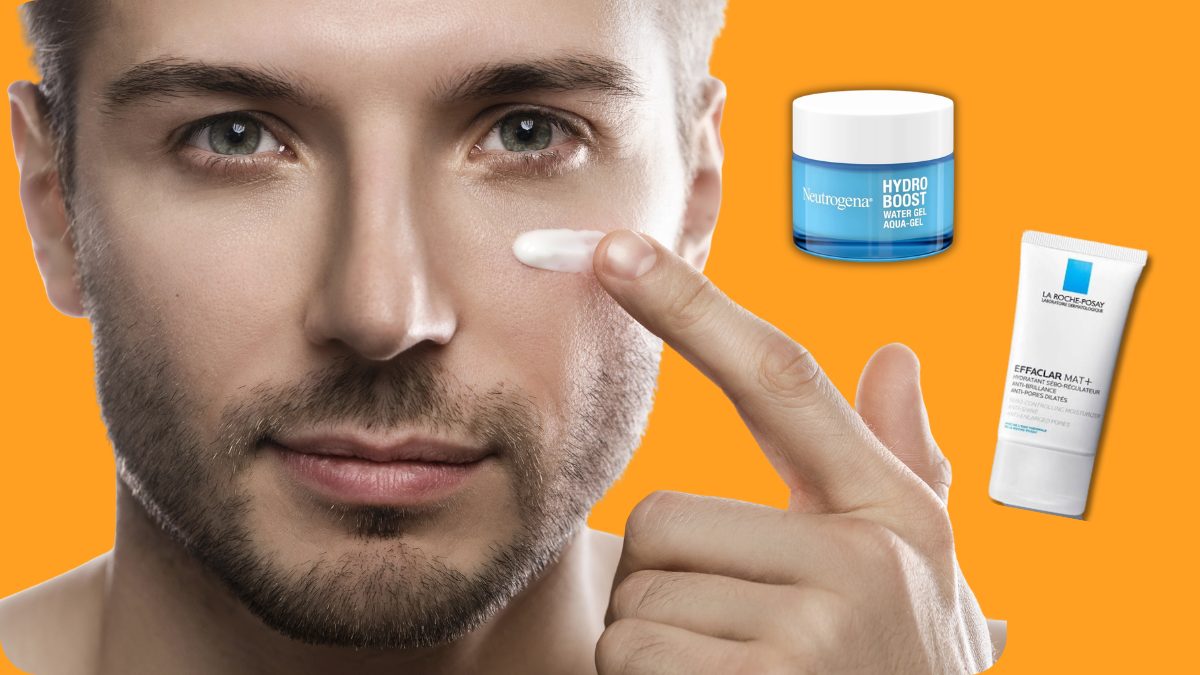
Moisturiser is the step most men either skip entirely or use incorrectly. Both produce the same result: skin that looks dull, feels tight and ages faster than it should.
The best moisturiser for men in 2026 is the one matched correctly to the skin type using it. A rich cream on oily skin produces breakouts. A lightweight gel on very dry skin produces tightness and irritation. Getting the match right is more important than any specific ingredient list or brand name. Once the right product is found, the results are visible within two weeks of twice-daily application.
Here is exactly what to use and how to use it.
Why Moisturising Is Non-Negotiable for Men in 2026
Men’s skin loses moisture more rapidly than women’s skin because shaving removes a thin layer of the skin surface barrier with every pass. This leaves skin more vulnerable to transepidermal water loss, environmental damage and irritation. Moisturising twice daily replaces what shaving and environmental exposure strip away, maintains the skin barrier that protects against ageing and irritation, and produces the visible difference between skin that looks healthy and skin that looks dull and fatigued.
Three specific reasons moisturising matters more for men than most assume:
Shaving is a form of daily exfoliation. Every shave removes dead skin cells and a portion of the outermost skin layer. This is why skin often feels and looks better immediately after shaving. It also means the barrier is temporarily compromised after every shave and requires active support through moisturiser application to prevent irritation and dryness from compounding daily.
Male skin produces more sebum than female skin but is still highly susceptible to dehydration. Sebum is not the same as moisture. An oily skin type can be simultaneously dehydrated, which produces the combination of shiny skin and tightness that many men experience. A lightweight, oil-free moisturiser addresses this without adding to oiliness.
The anti-ageing effect of consistent moisturising begins in a man’s twenties and is visible by his forties. Men who moisturise consistently from their twenties show significantly less fine line and wrinkle development at forty than those who do not, for the straightforward reason that hydrated skin maintains its elasticity longer.
For the complete skincare picture within which moisturiser sits, read our skincare routine men 2026 guide.
How to Identify Your Skin Type
The bare face test is the most reliable method. Wash the face with a gentle cleanser, pat dry and wait one hour without applying any product. The skin’s behaviour in that hour without intervention is its natural state and tells you exactly which moisturiser category to look for.
Oily skin: the forehead, nose and chin appear visibly shiny within the hour. Pores are visible and may feel congested. The skin does not feel tight but may feel slightly heavy or thick.
Dry skin: the face feels tight, may appear dull or slightly flaky and the skin around the nose and cheeks may show faint fine lines more visibly than when moisturised. Pores are generally small.
Combination skin: oiliness is concentrated in the t-zone (forehead, nose and chin) while the cheeks remain normal or slightly dry. This is the most common skin type in men.
Normal skin: comfortable, neither tight nor shiny, balanced oil production and small but visible pores. Normal skin still benefits significantly from consistent moisturising for barrier maintenance and anti-ageing effect.
Sensitive skin: reactive to products, prone to redness or irritation after application and more easily disrupted by environmental factors or product changes. Sensitive skin requires fragrance-free, minimal ingredient formulations.
Best Moisturisers for Men 2026 by Skin Type
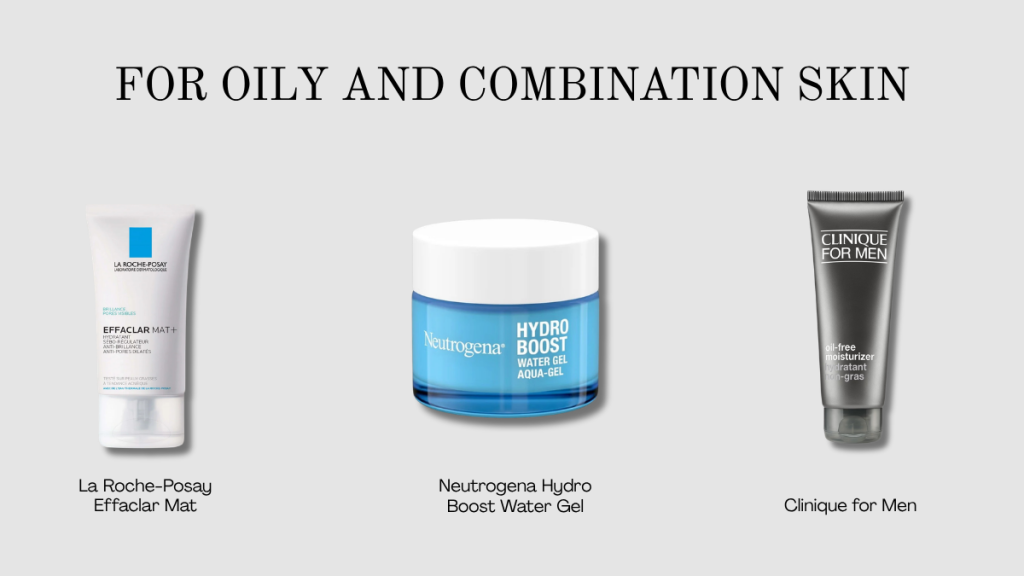
For Oily and Combination Skin
Neutrogena Hydro Boost Water Gel A lightweight, oil-free gel formula that delivers significant hydration without any heaviness, shine or pore-blocking. Hyaluronic acid draws moisture to the skin surface. The most widely recommended oily skin moisturiser in 2026 for men starting a skincare routine and the one most dermatologists reach for when recommending a moisturiser to a first-time skincare user with oily or combination skin.
La Roche-Posay Effaclar Mat Specifically formulated for oily skin with a mattifying effect that reduces shine through the day. Zinc and sebulyse technology regulate sebum production while providing adequate hydration. A stronger choice for men with consistently oily skin who want both hydration and visible shine control.
Clinique for Men Oil Control Moisturizer A lightweight lotion designed specifically for oily male skin. Available at most department stores, a clean application experience and consistent performance across the day without pore congestion.
For Dry and Normal Skin
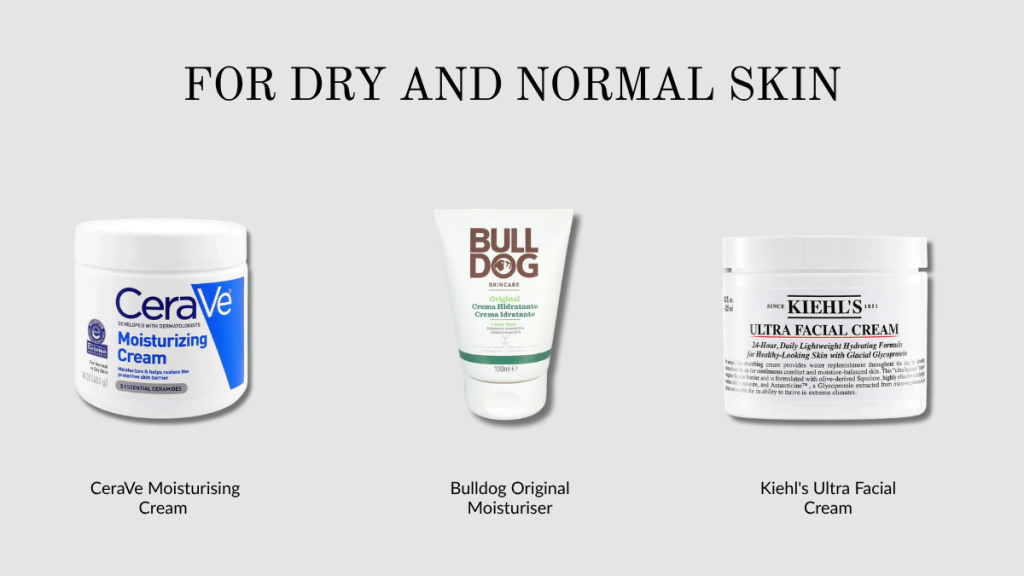
CeraVe Moisturising Cream The most consistently recommended accessible moisturiser regardless of skin type and particularly strong for dry and normal skin. Three ceramides, hyaluronic acid and niacinamide in a non-greasy formulation that absorbs well and provides genuine barrier restoration. The most dermatologist-recommended moisturiser globally and available everywhere. An exceptional value reference regardless of budget.
Kiehl’s Ultra Facial Cream A premium entry for dry and normal skin. Lightweight enough not to feel heavy but rich enough to genuinely address dry skin through the day. One of the most popular men’s moisturisers at the accessible premium level and a reliable recommendation for men who want to invest slightly more in this step.
Bulldog Original Moisturiser Specifically designed for men. Fragrance-free, with aloe vera and green tea. A strong mid-range option that handles both daily hydration and post-shave application particularly well.
For Sensitive Skin
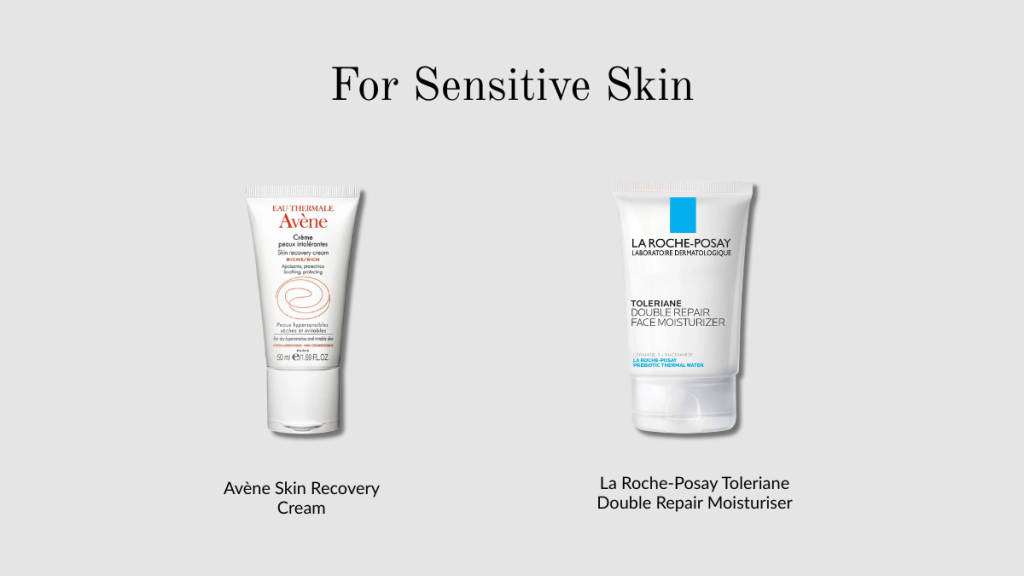
Avène Skin Recovery Cream One of the most widely recommended sensitive skin moisturisers globally. Avène thermal spring water as the base, minimal ingredient list and formulated specifically for reactive and sensitised skin. Fragrance-free, preservative-minimal and well tolerated by skin that reacts to most other products.
La Roche-Posay Toleriane Double Repair Moisturiser Ceramide and niacinamide formula in a lightweight lotion that restores the barrier while calming reactive skin. One of the strongest sensitive skin options at an accessible price point and consistently well-rated in dermatological practice.
SPF Moisturisers: Why Men Should Use Them Every Morning
An SPF moisturiser in the morning is the single most impactful anti-ageing and skin health decision a man can make. UV exposure is responsible for approximately 80 percent of the visible signs of skin ageing including fine lines, pigmentation, texture change and loss of elasticity. Applying an SPF moisturiser every morning as the final skincare step before leaving the house prevents this damage from accumulating in a way that no subsequent skincare product can reverse.
The practical case for an SPF moisturiser rather than two separate products:
A combined SPF moisturiser reduces the number of skincare steps from three to two in the morning routine and eliminates the friction that causes many men to skip SPF when it is a separate product.
Modern SPF moisturisers at SPF 30 and above are lightweight, non-white-casting and genuinely indistinguishable in texture from non-SPF moisturisers. The old resistance to SPF based on heavy, white textures is no longer valid.
SPF 30 blocks approximately 97 percent of UVB rays. SPF 50 blocks approximately 98 percent. Both provide adequate protection for everyday urban and suburban sun exposure. Higher factors are appropriate for extended outdoor time or high-UV environments.
Best SPF Moisturisers for Men 2026:
La Roche-Posay Anthelios Invisible Fluid SPF 50 is the most widely recommended across all skin types. Lightweight, genuinely invisible on skin and genuinely broad-spectrum protection.
Neutrogena Hydro Boost Water Gel SPF 25 suits oily and combination skin with a water-gel texture that provides hydration and protection without any heaviness.
Bulldog Original Moisturiser SPF 15 is the most accessible starting point for men new to SPF who want a straightforward combined product at an affordable price.
For how SPF fits into the complete morning routine, read our morning routine men 2026 guide.
How to Apply Moisturiser Correctly
Most men apply moisturiser correctly in theory (face and neck) but miss several practical details that affect how well the product performs and how long the results last.
Apply to slightly damp skin. The thirty seconds after patting the face dry following cleansing is the optimal moisturiser application window. Slightly damp skin absorbs moisturiser more effectively and more deeply than completely dry skin. This single adjustment improves the performance of any moisturiser without changing the product.
Use the right amount. A pea-sized amount for a lightweight gel, slightly more for a cream. Too much moisturiser on oily skin contributes to congestion and shine. Too little on dry skin provides insufficient barrier support. Start with the recommended amount and adjust based on how the skin feels through the day.
Cover the neck. The neck receives the same environmental and UV exposure as the face but most men stop moisturiser application at the jawline. Neck skin is thinner and shows signs of ageing and sun damage earlier than facial skin. Extending the application to the neck takes five seconds and produces visible results over time.
Apply morning and evening. Morning moisturiser with SPF protects through the day. Evening moisturiser without SPF provides overnight barrier repair support. Both are necessary and their absence at either time reduces the cumulative benefit significantly.
Do not rub aggressively. Pat or press the moisturiser into the skin rather than rubbing it. Rubbing creates friction on the skin surface and can contribute to irritation, particularly on sensitive or recently shaved skin.
Best Moisturiser Ingredients to Look For
Ceramides restore and maintain the skin barrier. The barrier is the structure that keeps moisture in and environmental damage out. CeraVe’s patented ceramide delivery system is the most referenced example of ceramide technology in accessible skincare.
Hyaluronic acid holds up to 1,000 times its weight in water and draws moisture from the environment and from deeper skin layers to the surface. Present in most quality moisturisers as a hydration amplifier.
Niacinamide at 2 to 5 percent reduces pore appearance, regulates sebum production, improves skin tone and supports barrier function. One of the most versatile and most evidence-backed skincare ingredients available.
Glycerin is a humectant that attracts and retains moisture. Present in virtually every quality moisturiser as a core hydration ingredient.
Peptides support collagen synthesis and are the most evidence-backed anti-ageing ingredient category after SPF. Present in premium moisturisers and worth looking for in a second or upgraded moisturiser once the basics are established.
Fragrance: avoid it. Fragrance is the most common cause of contact dermatitis in skincare and provides no functional benefit to the skin. A fragrance-free moisturiser performs identically to a fragranced version in terms of skin benefit while eliminating the most common cause of skincare-related irritation.
FAQs
Q: What is the best moisturiser for men in 2026? A: For oily and combination skin, Neutrogena Hydro Boost Water Gel or La Roche-Posay Effaclar Mat. For dry and normal skin, CeraVe Moisturising Cream or Kiehl’s Ultra Facial Cream. For sensitive skin, Avène Skin Recovery Cream or La Roche-Posay Toleriane Double Repair. The best moisturiser is always the one correctly matched to the skin type using it.
Q: Do men really need to moisturise every day? A: Yes, twice daily. Morning moisturiser with SPF provides hydration and UV protection through the day. Evening moisturiser without SPF provides overnight barrier repair and hydration support. Skipping either reduces the cumulative benefit significantly and the visible difference between consistent and inconsistent moisturising is apparent within four to six weeks.
Q: Should men use SPF moisturiser every day? A: Yes, even on cloudy days. UV rays penetrate cloud cover and glass, meaning indoor workers still receive meaningful UV exposure through windows. The damage is cumulative over years and is significantly easier to prevent than to treat. SPF 30 every morning as the final skincare step is one of the highest return investments in men’s skin health and appearance.
Q: How long does it take to see results from moisturising? A: Immediate hydration improvement is visible within hours of the first application. Skin tone and texture improvements become noticeable within two to four weeks of consistent twice-daily use. Anti-ageing benefits including reduced fine line appearance and improved skin elasticity become visible over months and accumulate over years.
Q: Can men use women’s moisturisers? A: Yes. The active ingredients in skincare are not gender-specific and most premium skincare brands produce comparable formulations across their men’s and women’s lines. The primary differences are fragrance profile and marketing. A fragrance-free women’s moisturiser appropriate for the skin type works equally well on male skin as the equivalent men’s product
Final Thoughts
The right moisturiser for a man’s skin type, applied correctly twice daily over months and years, produces a visible and compounding improvement in how his skin looks and ages. The product does not need to be expensive. The skin type match needs to be correct and the application needs to be consistent. Those two requirements produce better results than any number of premium products used incorrectly or inconsistently.
For the complete men’s skincare picture including the best face wash, SPF choices and evening routine, explore beingover.com and find everything in one place.









No Comments