


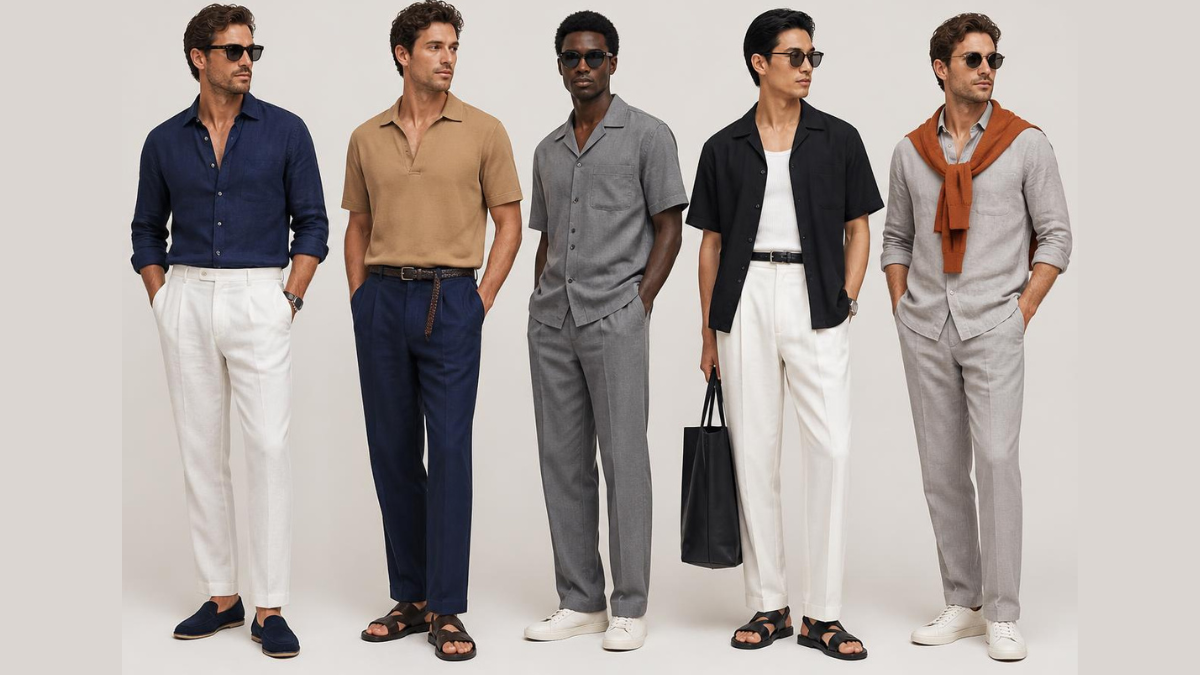
Most men who struggle with getting dressed are not struggling with a shortage of clothes. They are struggling with colour. Pieces that look good individually sit in the wardrobe because nothing works with them. Outfits get abandoned at the mirror because something feels off without knowing why.
The best approach to colour coordination in men’s outfits in 2026 is not complicated. It starts with a neutral foundation, uses a small set of reliable pairing rules and adds accent colour carefully rather than freely. Men who dress well are almost never doing anything dramatic with colour. They are simply doing a small number of things consistently right.
Here is the complete guide.
Why Colour Is the Most Common Men’s Style Problem
Colour is the most common men’s style problem because it operates invisibly. A man knows when a garment does not fit. He can see it. Colour clashes are less obviously visible to the wearer while being immediately apparent to everyone else. The result is a wardrobe full of individual pieces that all seemed right in isolation and that regularly fail to produce coherent combinations when pulled together.
Three specific patterns create this problem:
Purchasing without considering what the new piece will be worn with. A piece that looks attractive in a shop in isolation does not necessarily work with anything already at home. The colour coordination problem is overwhelmingly a purchasing problem before it is a dressing problem.
Underestimating the power of tonal relationships. Colours do not need to match to work together. They need to relate tonally. A dark navy and a medium camel do not match but they relate through their tonal relationship in a way that makes them feel deliberately paired. Understanding tonal relationships solves the colour coordination problem more effectively than any specific rule about which colours match which.
Overestimating the role of bold colour in interesting outfits. The most consistently stylish men in 2026 are not dressing in bold colour combinations. They are dressing in carefully related neutral tones with one element of personality. The interest in their outfits comes from fit, fabric quality and proportion rather than from colour drama.
The Neutral Foundation That Solves Most Problems
The most reliable solution to men’s colour coordination is to build the wardrobe on neutral tones and use those neutrals as the combination logic. Neutrals by definition work with each other and with most accent colours. A wardrobe built primarily on white, grey, navy, black and earth tones produces an enormous number of coherent combinations without requiring active colour matching on any given morning.
The core neutrals for men in 2026:
White and off white. The lightest anchor tone that pairs with every other neutral and with almost every accent colour. A white tee under a camel coat. A white shirt with navy trousers. White and any other neutral is almost always correct.
Grey. The most versatile neutral because it sits between white and black and relates tonally to both. Light grey, mid grey and charcoal are all distinct but related. Grey pairs naturally with navy, white, camel, black and most earth tones.
Navy. A dark cool tone that pairs naturally with white, grey, camel and most earth tones. Navy and camel is one of the strongest two-colour combinations in men’s dressing. Navy and white is the most classic pairing in casual and smart casual menswear.
Camel and sand. Warm neutrals that pair naturally with navy, white, grey and other earth tones. The warmth of camel relates to the warmth of rust, olive and burgundy in a way that cool grey does not, making camel the most versatile bridge between neutral and accent territory.
Olive. A mid-dark earth tone that pairs naturally with navy, camel, white and grey. Olive works particularly well with rust and burgundy for an autumn palette and with white and sand for a warmer seasonal palette.
Black. The darkest neutral that works with almost everything but dominates most combinations. Black and white is classic. Black and navy looks dark-on-dark without enough contrast for most contexts. Black works best as the single darkest element in a combination that includes at least one lighter neutral.
The Core Colour Pairing Rules for Men
Rule 1: Maximum three colours per outfit.
The most reliable colour rule in men’s dressing. More than three distinct colours in a single outfit creates visual noise that reads as uncoordinated regardless of how carefully the individual pieces were chosen. Three colours or fewer produces coherence. The simplest and most consistently well-executed outfits often use only two colours in different tones.
Rule 2: Match the tonal weight of each piece.
Tonal weight refers to how light or dark a colour is. Outfits where every piece is similar in tonal weight (all medium tones, for example) can feel flat. Outfits with one light, one medium and one dark element have visual dimension. This is why a light shirt, medium chino and dark Chelsea boot combination works so well. The three tonal levels create depth within a very simple colour palette.
Rule 3: Warm tones with warm tones, cool tones with cool tones.
Warm colours have yellow, red or orange undertones. Camel, rust, sand and olive are warm. Cool colours have blue, purple or grey undertones. Navy, charcoal, burgundy and forest green are cool. Mixing warm and cool tones in an outfit creates visual tension that reads as unintended rather than dramatic. The most reliable combinations stay within one temperature family or use neutrals (white, grey, black) that bridge both.
Rule 4: One pattern per outfit at most.
When colour and pattern are combined, the pattern effectively acts as a second colour element and the same maximum three elements rule applies across both. A patterned shirt with patterned trousers and a patterned scarf produces visual chaos regardless of how carefully the individual pieces were chosen. One pattern, everything else plain.
Rule 5: Shoes and belt in the same colour family.
The belt and shoes do not need to match exactly but should relate to the same colour family. Brown belt with brown shoes. Black belt with black shoes. Mixing black shoes with a brown belt is one of those details that people notice without knowing why the outfit feels slightly off.
Best Colour Combinations for Men’s Outfits 2026
Navy and white
The most universally reliable two-colour combination in men’s dressing. Navy tee with white chinos. White Oxford shirt with navy trousers. Navy blazer over a white tee. Every variation of this combination works because the contrast between the two tones is clear, the temperature relationship is consistent (both are cool or neutral in temperature) and neither colour overwhelms the other.
Camel and navy
The strongest warm-cool contrast combination in men’s neutral dressing. A camel coat over a navy sweater and dark trousers. A camel overshirt over a navy tee. The warmth of the camel against the coolness of the navy creates a visual relationship that reads as considered and refined without requiring any effort beyond putting two well-chosen pieces together.
Grey and white with one earth tone
A three-colour combination using grey trousers, a white tee and one earth tone piece, either a rust overshirt, a camel jacket or an olive knit. This combination works because the earth tone accent is doing all the colour work while the white and grey foundation provides the contrast and neutrality that prevents the accent from overwhelming the outfit.
All navy or all grey tonal
A monochromatic outfit in navy or grey using varying tones of the same colour family. A light grey tee, mid-grey chinos and a charcoal blazer. A mid-navy overshirt over a dark navy tee with dark jeans. Tonal dressing works because the relationship between pieces is tonally consistent even without colour contrast and the interest comes from texture and proportion rather than colour variety.
White, black and one accent
A high contrast two-colour base of white and black with one accent piece. A white tee and black jeans with a camel coat. A white shirt and black chinos with a rust scarf. The high contrast of white and black creates a visual foundation that one accent piece enriches without complicating.
For how these colour combinations work in complete outfit contexts, read our casual outfits men 2026 and smart casual outfits men 2026 guides.
How to Add Accent Colour Without Getting It Wrong
Accent colour in a men’s outfit works best as a single piece against a neutral foundation. The accent is the statement. The neutrals are the context that allows the accent to be read correctly. A rust overshirt over a white tee with grey chinos reads as deliberate and interesting because the rust has context. The same rust overshirt over burgundy trousers with an olive tee competes with itself and with everything else.
The most effective accent colours for men in 2026 and their natural neutral pairings:
Rust and terracotta pair naturally with white, grey, camel and sand. Rust over white or grey produces a warm-against-neutral combination that is one of the signature looks of 2026’s earth tone movement.
Sage green pairs naturally with white, cream and camel. A sage green piece in an otherwise white and cream outfit creates a soft, nature-adjacent colour story that is particularly strong in spring.
Burgundy pairs naturally with grey and navy. A burgundy knit over grey trousers and a white shirt is a classic autumn accent combination that works because burgundy and grey have the same cool-to-neutral temperature relationship.
Mustard yellow pairs naturally with grey and navy. High contrast and bold as accent colours go but grounded reliably by grey or navy as the foundation neutrals.
The rule for any accent colour: it should be the only one in the outfit. One accent piece, everything else in foundation neutrals. This rule produces reliable results regardless of which specific accent colour is chosen.
Colour Coordination Mistakes Men Make
Matching rather than coordinating is the most common colour error. Attempting to match the exact shade of a shoe to the exact shade of a belt or a tie produces an outfit that looks like it is trying too hard. Coordinating means related tones in the same colour family. A medium brown Oxford with a lighter tan leather belt in the same warm brown family. Different shades, same family, genuinely coordinated.
Wearing navy and black in the same outfit without awareness of the tension this creates. Navy and black are both dark tones but they fight each other at close range because of their temperature difference. Navy is cool with a slight blue quality. Black is neutral and absorbs everything. The combination does not read as deliberately tonal because neither is light enough to provide contrast. The fix is to separate navy and black with a lighter neutral piece or to choose one of the two as the single dark anchor.
Adding colour to fix an outfit that feels boring rather than addressing the actual issue. A boring outfit is almost never boring because of insufficient colour. It is boring because of poor fit, lack of proportion variation or fabric weight mismatch. Adding a bold colour to an outfit with these problems does not fix them. The fix is to address fit and proportion first. Colour only performs well when the foundation is right.
Buying accent pieces without a neutral foundation to anchor them. A wardrobe with five interesting pieces in five different accent colours and no quality neutral foundations cannot produce coherent outfits regardless of how individual each interesting piece is. The fix is always to build the neutral foundation first and add accent pieces second.
FAQs
Q: What colours go well together in men’s outfits in 2026? A: The most reliable combinations are navy and white, camel and navy, grey and white with one earth tone accent, tonal navy or tonal grey outfits and white and black with one accent colour. In 2026 specifically, earth tones including rust, sage green, camel and warm beige are the dominant accent palette working against neutral foundations of white, grey and navy.
Q: How many colours should men wear at once? A: A maximum of three distinct colours per outfit. Two is often stronger. One, in a tonal monochrome outfit, is the most confident choice and the hardest to get wrong. More than three distinct colours in a single outfit produces visual noise that reads as uncoordinated regardless of the individual quality of each piece.
Q: Can men wear navy and black together? A: With awareness of the tension this creates. Navy and black are both dark and cool but navy has a blue quality that fights with the neutral absorption of black at close range. If both appear in an outfit, separating them with a lighter neutral piece reduces the tension. As a deliberate tonal choice in very dim lighting or at a distance it can work. As a casual everyday combination it rarely produces the intended result.
Q: What is the easiest colour palette to build a men’s wardrobe around? A: White, navy, grey and camel. These four tones produce the maximum number of coherent outfit combinations with the minimum number of pieces and the minimum daily colour coordination decision required. Every item in a wardrobe built around these four tones works with every other item, which eliminates the morning problem of combinations that do not work together.
Q: How do men add personality to an outfit without using lots of colour? A: Through texture, proportion and fabric weight rather than colour. A chunky knit, a canvas overshirt worn open, a quality leather boot or a distinctive watch all add visual interest and personality to a neutral outfit without introducing colour complexity. Tonal dressing in varied textures is consistently more successful than loud colour combinations in producing outfits that look both interesting and considered.
Final Thoughts
Colour coordination for men in 2026 is not a talent some people have and others do not. It is a set of rules that produce reliable results when followed consistently and that become intuitive within weeks of deliberate practice. Build the neutral foundation. Apply the three-colour maximum. Match temperatures within each outfit. Add one accent piece at a time. These four principles solve the vast majority of colour coordination problems that men face daily.
For the complete picture on men’s style across every outfit category and occasion, explore beingover.com and find everything in one place.





No Comments