


What a man wears to work sends a message before he says a word. In a meeting, a presentation or even just a Monday morning in the office, how you dress communicates ambition, professionalism and self-awareness.
The best men’s office outfits in 2026 are built around the smart casual register, with the ability to shift toward formal when the occasion demands. The days of rigid dress codes are largely over but the expectation of intentional, considered dressing has not disappeared. It has simply become more flexible. In 2026, the men who look best at work are those who dress with clear intention within whatever latitude their workplace allows.
Here is exactly how to dress for every type of office environment.
Why Office Dressing Still Matters in 2026
Dressing well at work in 2026 matters because the visual impression created in a professional environment directly affects how colleagues, managers and clients perceive competence, attention to detail and ambition. Multiple studies confirm that professional appearance influences performance evaluations, promotion considerations and client confidence. The standards have relaxed considerably compared with previous generations but the principle that appearance communicates professionalism has not changed.
The practical case is straightforward.
Dressing at or above the standard of a workplace communicates that the work environment is taken seriously. It signals readiness for the next level rather than comfort at the current one.
Men who dress intentionally in professional settings are consistently perceived as more organised and more detail-oriented regardless of their actual work output. Appearance primes the perception of everything else.
In remote and hybrid working environments, the one or two days spent in the physical office carry disproportionate visibility. The impression made in person carries more weight now than when office presence was universal.
Understanding Workplace Dress Codes
The three workplace dress codes that most men encounter in 2026 are business formal, business casual and smart casual. Business formal requires a suit, a dress shirt, a tie and formal shoes. Business casual removes the tie requirement and allows more flexibility in trouser and shoe choice while maintaining a polished overall standard. Smart casual is the most common contemporary office dress code and allows quality casualwear combined with elevated pieces such as blazers, chinos and loafers.
Business formal in practice: a well-fitted suit in navy, charcoal or grey, a white or blue dress shirt, a conservative tie, Oxford or Derby shoes in black or dark brown. This is the dress code for client-facing roles, presentations to senior leadership, interviews and formal corporate environments.
Business casual in practice: dress trousers or tailored chinos, a collared shirt (Oxford, dress shirt or polo), a blazer where appropriate, leather loafers or Oxfords. No tie required, no jeans, no trainers.
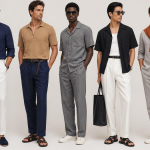
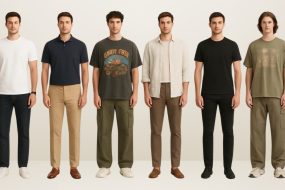
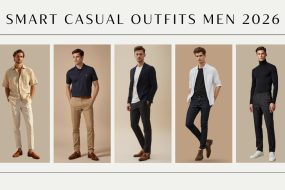
Smart casual in practice: the most common creative, tech, media and flexible professional environment dress code. Well-fitted dark jeans or chinos, a quality collared shirt or plain tee under a blazer, clean leather loafers or minimal leather trainers. This register has the most flexibility but still requires that every item be clean, fitted and intentional.
For the complete smart casual guide with outfit combinations across every occasion, read our smart casual outfits men 2026 breakdown.
Best Office Outfit Combinations for Men 2026
Business Formal: The Classic Suit
A well-fitted two-piece suit in navy or charcoal grey paired with a white cotton dress shirt, a silk tie in a complementary tone, black Oxford shoes and a quality leather belt. The suit must fit properly across the shoulders and chest with a clean trouser break. This is not an outfit for improvisation. Every element must be intentional and well-maintained.
For colder months, a long wool coat in camel or charcoal over the suit and Chelsea boots or Oxfords is the complete formal winter work look.
Business Casual: The Elevated Professional
Tailored chinos in mid-grey or navy paired with a well-fitted Oxford shirt in white or blue, a slim blazer in a complementary tone and leather Derby or Oxford shoes. The shirt can be tucked for a more formal read or half-tucked for a slightly more contemporary one. This combination works for most client-facing environments and higher-level professional settings where a full suit is not required.
Smart Casual: The Modern Office Standard
Dark straight-leg jeans in an excellent condition paired with a quality polo shirt or a plain fitted Oxford shirt left untucked, a navy or grey unstructured blazer and clean leather loafers or minimal leather trainers. This is the most versatile and most commonly worn office outfit in 2026 across creative, technology, media and flexible professional environments.
Smart Casual: The Contemporary Work Look
A quality mock neck or slim crew neck knit in navy, grey or camel over a plain tee or worn as the top layer, paired with tailored straight trousers and Chelsea boots. Cleaner and more contemporary than the traditional shirt and blazer formula and particularly strong in creative and design environments where the aesthetic standard is high but the formality level is flexible.
Casual Friday or Low-Key Office
A well-fitted plain white or grey tee paired with dark straight-leg jeans in excellent condition, clean white leather sneakers and a quality watch. This works for genuinely casual office environments on the understanding that every item is clean, fits perfectly and the overall impression is clearly deliberate rather than coincidental.
For outfit ideas that transition from office to evening, read our date night outfits men 2026 guide.
How to Build a Work Wardrobe Step by Step
Step 1: Clarify the dress code of the environment.
Before buying anything, be clear about the actual standard expected. What do well-regarded colleagues wear? What does the leadership team wear? These are more reliable guides than the official dress code policy which often describes a ceiling rather than a norm.
Step 2: Build the foundation in neutrals.
Navy, charcoal, grey and white cover every professional context. A navy blazer, grey and navy chinos, white and blue shirts, black and tan leather shoes. These items all work together and connect with any additions bought later.
Step 3: Invest in the pieces most frequently seen.
The jacket and blazer, the shoes and the watch are the pieces most noticed in professional settings. These deserve proportionally more investment than basics like tees and socks.
Step 4: Get fit right on the most formal pieces.
A suit or blazer that does not fit across the shoulders and chest looks worse than a casual outfit that fits perfectly. Tailoring is not an optional extra for formal work pieces. It is part of the cost of the item.
Step 5: Add personality carefully.
A consistent professional wardrobe built on neutral foundations can accommodate personality through one element per outfit: a textured tie, a quality pocket square, an interesting watch, a distinctive pair of shoes. One personality element at a time is the rule.
Pro tip: Own two quality pairs of office shoes and rotate them. Leather shoes last significantly longer when given 24 hours to dry and recover between wearings. Cedar shoe trees in each pair preserve shape and absorb moisture. This single habit doubles the lifespan of every pair.
Step 6: Maintain everything properly.
A pressed shirt, polished shoes and a lint-free blazer communicate the same attention to detail as the choice of garment. A quality item poorly maintained looks worse than an ordinary item kept in excellent condition.
Best Pieces for Men’s Office Style 2026
A slim navy blazer covers more professional situations than any other single piece and functions equally well over a tee in a smart casual environment, over a shirt in a business casual one and as part of a coordinated suit in a formal setting.
Well-fitted Oxford cloth shirts in white and light blue are the professional wardrobe equivalent of white tees in the casual wardrobe. They work in every register from smart casual to business formal and combine with every bottom half option.
Tailored chinos in mid-grey and navy bridge business casual and smart casual seamlessly and are more practical for most contemporary professional environments than full dress trousers.
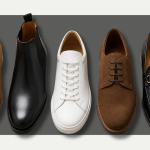
Chelsea boots in black leather work from smart casual to business casual and look entirely appropriate in most contemporary office settings. They are also significantly more comfortable for full-day wear than most formal Oxford shoes.
A quality leather belt in black and a second in tan or brown. These connect the footwear to the trousers and are the detail most visible in seated meetings and presentations.
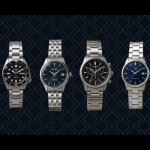
A clean, appropriate watch at the right formality level for the environment. For formal settings, a slim dress watch. For smart casual, an everyday watch in a clean and considered design. For the full watch guide by occasion and budget, read our best dress watches men 2026 guide.
Office Outfit Mistakes Men Make
Wearing clothes that are not freshly pressed or cleaned is the most common and most damaging professional appearance mistake. A wrinkled shirt and creased trousers communicate a lack of preparation regardless of the quality of the garments. The fix is to check every item the evening before and to deal with any maintenance issues then rather than rushing in the morning.
Shoes that are scuffed, unpolished or visibly worn in a professional environment are noticed more consistently than men realise. The fix is a weekly five-minute polish routine and the habit of checking shoe condition before any meeting or presentation.
Wearing clothes that do not fit in a professional setting. A shirt that is too tight across the chest, trousers that are too long or a blazer with shoulders that do not sit correctly all undermine an otherwise considered outfit. The fix is to have key professional pieces tailored when needed and to make fit the primary criterion for any work-related clothing purchase.
Misreading the dress code in either direction. Arriving significantly over-dressed creates almost as much discomfort as arriving significantly under-dressed. Both signal a misreading of the environment. The fix is to observe the actual standard of the workplace before forming a wardrobe, dress at or slightly above the evident norm and reserve more formal pieces for explicitly formal occasions.
FAQs
Q: What should men wear to the office in 2026? A: The right answer depends on the workplace dress code. For business formal environments, a well-fitted suit and dress shirt. For business casual, tailored chinos and a collared shirt with a blazer. For smart casual, dark jeans or chinos, a quality shirt or polo, and leather loafers or minimal trainers. In every case the priorities are fit, cleanliness and clear intention.
Q: What is the most versatile men’s office outfit in 2026? A: A slim navy or grey blazer over a quality Oxford shirt with tailored chinos and leather loafers is the most versatile professional outfit available. It works across business casual and smart casual environments, moves from office to evening without significant adjustment and is appropriate for client meetings, presentations and everyday office wear simultaneously.
Q: Can men wear jeans to the office in 2026? A: Yes, in smart casual and casual professional environments. Dark, well-fitted straight-leg jeans with no distressing, a quality shirt or collared top and leather loafers or minimal leather trainers constitute a smart casual office outfit. Light-wash, distressed or overly relaxed jeans remain inappropriate in most professional settings regardless of the dress code.
Q: What shoes should men wear to work in 2026? A: Chelsea boots in black leather are the most versatile professional shoe and work across smart casual to business casual. Leather loafers are excellent for smart casual environments. Oxford or Derby shoes in black are the standard for business formal and client-facing contexts. All should be kept polished and in excellent condition as shoes are consistently among the first details noticed in professional settings.
Q: How should men dress for a job interview in 2026? A: One level above the everyday standard of the company being applied to. Research what the team typically wears and dress above that standard for the interview. When uncertain, business casual (chinos, Oxford shirt, blazer, leather shoes) is appropriate for almost any interview context. Err on the side of slightly overdressed rather than underdressed and ensure every item is clean, pressed and well-fitted.
Final Thoughts
Office dressing in 2026 rewards men who dress with clear intention within whatever latitude their workplace allows. The dress code has relaxed but the principle has not changed. Fit, cleanliness and consideration still communicate professionalism more reliably than any specific garment choice.
For the complete picture on men’s style across every occasion from office to weekend, explore beingover.com and find everything in one place.



No Comments